


CBT for PPPD
Persistent Postural-Perceptual Dizziness (PPPD)
Feeling dizzy, off balance or like you're walking on a boat? You're not alone. I offer specialist CBT for people living with Persistent Postural-Perceptual Dizziness (PPPD), helping you understand your symptoms, reduce fear and avoidance, and regain confidence in everyday life.
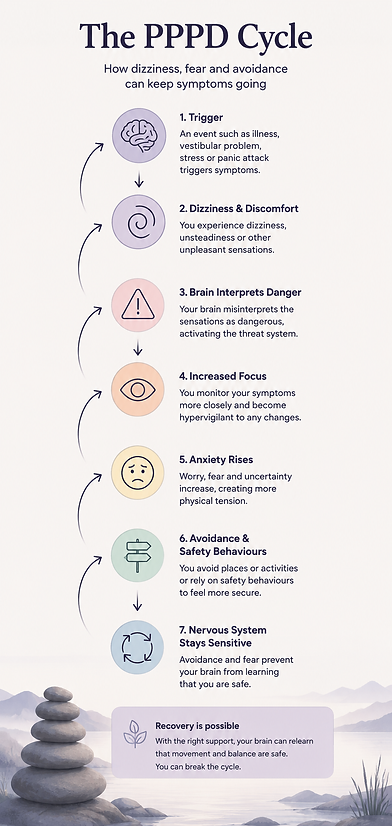
Persistent Postural-Perceptual Dizziness (PPPD) is a recognised long-term vestibular condition that affects the way the brain processes balance and movement. Although the symptoms are very real, they are not usually caused by ongoing damage to the inner ear or brain. Instead, the nervous system becomes overly sensitive and remains in a heightened state of alertness, even after the original trigger has resolved.
PPPD often develops following an event such as vestibular neuritis, benign paroxysmal positional vertigo (BPPV), vestibular migraine, a panic attack, illness, injury, or a particularly stressful period of life. While the original cause may improve, the brain can continue to perceive movement and balance as a potential threat, keeping the symptoms going.
People living with PPPD commonly describe feeling as though they are walking on a boat, rocking, swaying or floating. Symptoms are often worse when standing still, walking through busy environments, shopping in supermarkets, looking at shelves, or being surrounded by lots of movement or visual stimulation. Many people also notice that they become more aware of their symptoms when they are tired, stressed or anxious.
One of the most frustrating aspects of PPPD is that medical tests, scans and vestibular assessments are often normal or show very little. This can leave people feeling confused, worried or believing that no one understands what they are experiencing. However, PPPD is now widely recognised as a genuine and treatable condition, with growing evidence supporting a multidisciplinary approach to recovery.
Rather than being a sign that something is seriously wrong, PPPD reflects a nervous system that has become stuck in a protective mode. The brain is constantly monitoring for signs of imbalance, making you more aware of sensations that most people would automatically filter out. This increased focus can unintentionally keep the cycle of dizziness, fear and avoidance going.
The good news is that recovery is possible. With the right understanding, gradual exposure, and evidence-based approaches such as Cognitive Behavioural Therapy (CBT), many people learn to reduce their symptoms, rebuild confidence and return to activities they may have been avoiding.
What is PPD?

Common Symptoms of Persistent Postural-Perceptual Dizziness (PPPD)
Physical Symptoms
✓ Feeling as though you are walking on a boat
✓ Rocking or swaying sensations
✓ Feeling unsteady
✓ Brain fog
✓ Fatigue
✓ Visual sensitivity
✓ Feeling disconnected
Common Triggers
✓ Supermarkets
✓ Busy environments
✓ Standing still
✓ Walking through crowds
✓ Bright lights
✓ Scrolling on screens
✓ Stress and fatigue
✓ Looking at shelves
Living with Persistent Postural-Perceptual Dizziness (PPPD) can feel frightening and confusing. Many people begin to monitor their balance closely, avoid certain situations or become anxious about what their symptoms might mean. These reactions are completely understandable, but they can unintentionally keep the nervous system in a heightened state of alertness, making symptoms feel more persistent.
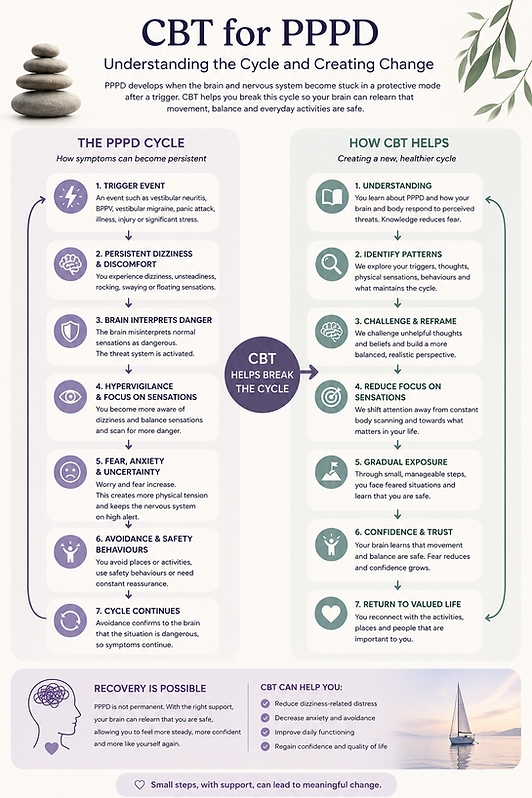
Cognitive Behavioural Therapy (CBT) does not suggest that your symptoms are "all in your head." Instead, CBT recognises that the dizziness and unsteadiness are very real while helping you understand how the brain and nervous system can become stuck in a protective cycle after the original trigger has resolved.
Together, we work to understand what is maintaining your symptoms and gradually retrain the brain to feel safe again. Therapy is always tailored to your individual experiences, goals and pace.
During CBT, we may work on:
✓ Understanding how PPPD develops and why symptoms continue.
✓ Reducing the fear associated with dizziness and uncertainty.
✓ Identifying patterns of symptom monitoring and hypervigilance.
✓ Shifting attention away from constant body scanning.
✓ Reducing avoidance and safety behaviours that may be maintaining symptoms.
✓ Building confidence through gradual, supported behavioural experiments and exposure.
✓ Learning practical strategies to manage anxiety, stress and setbacks.
✓ Returning to valued activities such as shopping, driving, exercise, travelling and socialising.
Recovery is rarely about eliminating every sensation of dizziness. Instead, the goal is to help your nervous system become less sensitive over time, allowing the brain to filter out unnecessary balance signals and enabling you to return to living the life you want to live.
Every person's recovery journey is different. Some people notice improvements within a few weeks, while others require more time, particularly if symptoms have been present for a long period. Therapy is collaborative, compassionate and focused on helping you make steady, sustainable progress.
How Can Cognitive Behavioural Therapy (CBT) Help PPPD?
The Research Behind CBT for PPPD
Research into Persistent Postural-Perceptual Dizziness (PPPD) has grown significantly in recent years. Current evidence supports Cognitive Behavioural Therapy (CBT) as an important part of a multidisciplinary treatment approach, helping to reduce dizziness-related disability, anxiety and avoidance while improving confidence and quality of life.
2024 Meta-analysis
Recent research analysing six randomised controlled trials found that adding Cognitive Behavioural Therapy (CBT) to conventional treatment significantly improved dizziness-related disability, anxiety and depression compared with conventional treatment alone.
Key finding
✓ Reduced dizziness handicap
✓ Lower anxiety and depression
✓ Improved day-to-day functioning
2025 Systematic Review
A 2025 systematic review concluded that conservative treatment approaches, particularly vestibular rehabilitation combined with CBT, can improve symptom severity, confidence and quality of life for people living with PPPD.
Key finding
✓ Better functional recovery
✓ Improved confidence
✓ Greater quality of life
Current Clinical Guidance
Modern clinical guidance recommends CBT as part of a multidisciplinary approach to treating PPPD. CBT helps reduce fear, avoidance, body scanning and hypervigilance, allowing the nervous system to gradually relearn that movement and balance are safe.
Key finding
✓ Reduces fear and avoidance
✓ Breaks the dizziness cycle
✓ Supports long-term recovery